Wednesday, April 21, 2010

Documentary Milestone: Nirvana! Live! Tonight! Sold Out!

What do you get when you combine a poet, a Croatian bassist and a jock drummer: Nirvana. They defined the 90's. They defined an entire generation. But it always seemed Nirvana were misunderstood, particularly their lead singer Kurt Cobain. Throughout the 90's Nirvana and Cobain were a safe haven for disenchanted youth across the world. He was unwillingly a voice and prophet to a generation which in the end proved to be too much to handle when mixed with manic depression and a serious heroin addiction. But 'Live! Tonight! Sold Out!', which was released a mere months after his suicide, shows a different side a Nirvana: the TRUE Nirvana.


The documentary is made up of interviews with Nirvana or its individual members, interspersed with live performances which was largely put together by Cobain prior to his death. Never before has a documentary captured the very essence of its subject better than 'Live! Tonight! Sold Out!' does. Throughout their history, and even today, when Nirvana is mentioned two things come to mind: Kurt Cobain's suicide and teenage angst. They get coupled together quite unfairly. Revisionist history has painted Cobain to be this dark, tortured soul (clearly exploiting his manic depression) who never wanted to be a rock star. This documentary puts this theory to rest. Nirvana clearly wanted to be rock stars and were actually quite happy and content being massive superstars. It's the media attention they would have rather done without. At one point Cobain says "We write songs and we sing. I'm sure what more people want. I can juggle, and do somersaults, I'm not sure what they want." Instead of showing Nirvana as deep artists, 'Live! Tonight! Sold Out!' shows them as they really were; three friends who loved to goof around and be silly (Cobain is seen in one interview in massive Buddy Holly glasses and a rain coat and in another all three use funny voices to answer all questions). They were all clearly very close and this is proven even further when at one point when Cobain crowd surfs and accidentally rams his guitar into a bouncer's head. The bouncer gets up on stage and punched Cobain in the back of the head to which drummer Dave Grohl leaps up faster than I've ever seen a human move, and tackles the guy.


The documentary says it covers the band from its beginning up to the tours for Nevermind, but the beginning it means is the start of their massive popularity. The live performances are electric. Cobain is shown as a true genius as he deliberately tries to sabotage his own songs in concert (much to the enjoyment of bassist Krist Noveselic and drummer Dave Grohl). Numerous times are we shown clips of Nirvana destroying their equipment on stage, many times setting up make-shift improv contraptions with drum sets and amps, only so they can toss either a guitar or themselves into it. They banter with the crows in between songs, and ask for requests only to play an insanely (and intentionally) bad version of some poppy 60's song before blowing into one of their classics. Another interesting note which sets Nirvana aside is their reluctance to play their 'chart' songs, most notably "Smells Like Teen Spirit". Many times the band will play the first few chords then stop and simply reply "We don't wanna play that one". Pure brilliance.

Live! Tonight! Sold Out! shows an entirely different side if Nirvana, one that I hadn't ever seen before. It turns out that Nirvana is simply three best friends who just want to goof around and play music. The music is genius and the way that Cobain goes about making Punk/Pop tracks is brilliant. He tells of how the studio's wanted clean versions of songs, but the band refused, sticking by their rough cut, watery garage band sound (in the liner booklet the band is quoted as saying their favorite album was In Utero, not Nevermind). We know all about Kurt Cobain's troubles and his ultimate fate which makes seeing him energetic and happy that mush more special. Whether he liked it or not though, he did embody an entire generation. At one point he kicks over an amplifier and pretends to surf. That single image sums up not only Nirvana, but Generation X and the 90's.

Photos Courtesy of:

www.rollingstone.com
www.nirvana.com

Tuesday, April 20, 2010

Cult Classic: Eraserhead

Truly bizarre. These words just about sum up David Lynch's 1977 film Eraserhead which is by far the most disturbing and strange film I have ever seen. The film is not disturbing in terms of gore or violence. It is disturbing because it eeks along like an extremely slow moving train which seems to never end, yet you can't take your eyes off of. The film never reached any popular success, but has since been classified as a cult classic.


In 1977 David Lynch released Eraserhead, a film which he had been tediously working on for some time. The film, shot entirely in black and white, follows Henry Spencer (Jack Nance) who is a printer on vacation for the duration of the film. He lives in a run down, highly industrial part of what is implied to be a larger city. He visits his estranged girlfriend, Mary X for dinner. The dinner consists of a miniature roasted chicken which kicks its thighs and oozes at the touch of a fork. The conversation is awkward (Dialogue is very, very scarce and few and far in between) and ends with Mary's mother telling Henry (after many aburt and emotional outbursts) that Mary has just had a child after an abnormally short pregnancy and he must now Marry Mary. The baby is sick, fits in the palm of Henry's hand and resembles a prehistoric creature. They live in Henry's small, shoty apartment and soon after Mary leaves him. Henry has to tend to the baby by himself and is soon seeing visions of a man in a planet pulling levers and a woman with chipmunk cheeks creepily singing "In Heaven everything is fine/ You've got good things and I've got mine/ In Heaven everything is fine." In a dream, Henry's head pops off and is found by a boy who take it to a pencil factory to which Henry's brains are turned into an eraser. The film ends with Henry taking off the baby's bandage, and accidentally exposing its vital organs. As it screams in pain, Henry stabs it with the scissors which causes the apartments electricity to overload. The baby's head soon turns into a planet which soon explodes. We last see the man with the levers struggling to control everything and Henry, with eraser shavings billowing from his head, walking into a bright light and white noise builds and builds up to a crescendo then stops. The screen goes black and the credits silently roll.


After viewing this film, I felt violated. My first exact words when I looked at my dad were "What the hell did I just watch?" I had never felt so uncomfortable watching a movie before until Eraserhead. The main reason involves the question "What is this about?" Is it about God and vengeance? Is it about the cruelty of man? Is it a giant anti-industry ad? Or is it simply about how a mundane life can drive a sane man insane? It's so difficult to watch because you feel as though you're trapped and can't get out. Everything is so bizarre and twisted, you feel unsafe. A lot of people can make a movie about nothing and it would be a horrible mess, but David Lynch somehow crafted a masterpiece of intense strangeness. It defines his career for every film he makes is some what off the norm. He himself is a bit off the norm and is a true dark poet's artist making everything pretentiously long and tedious yet it works. Eraserhead screws with your mind in ways you never thought possible and for this, it is truly a cult cinema classic.

Photos Courtesy of:

www.imdb.com
www.bbcmedis.com

Tuesday, April 13, 2010

British Masterpiece: Trainspotting

Drugs. Thick accents. Raves. Iggy Pop. These are the words that come to mind when Danny Boyle's 1996 film Trainspotting is mentioned. The film launched the careers of Ewan McGregor, Danny Boyle and ushered in a wave of pop culture which is referred to as the second British Invasion or simply "Cool Britannia". The film is the British version of Pulp Fiction, with cool dialogue, and classic scenes fueled by massive pop tracks of the years past. But what makes Trainspotting a classic is its subject matter and how it is dealt with by director Danny Boyle.


The film follows Mark "Rent Boy" Renton (Ewan McGregor) who, along with his friends, are twenty something heroin addicts in mid-eighties Edinburgh, Scotland. They aren't like the stereotypical heroin addicts in TV ads. Renton and his friends, as he states at one point, are full functioning drug addicts. They steal to get money for their addiction, steal prescriptions and live off welfare. The film dives right in, showing the gang shooting up at Mother Superior's. Renton says he is kicking the junk, which sets off the plot. Renton's journey to get clean. His friend Sick Boy, says he'll kick the junk too just to prove to Renton he can do it too. Renton barricades himself in a room but breaks out to get one final hit(a common theme in this film).


Critics who were opposed to the film claimed the film glorified heroin and it's users because the film features a great deal of humor (see Renton's surreal experience climbing into the toilet while in the "worst Toilet in Scotland"). This is simply false. The film shows Renton and his friends in a bright light because that is how they feel on heroin. The only friend who doesn't use is their jock friend Tommy. They even go as far as to keep a baby in the room with them as they shoot up. This is very important. We see the baby at the beginning of the film, but then (much like the characters) forget about it until we discover it dead from being neglected. At this point, the film flips from being a fun movie where you feel good for the characters, into a film where you despise the characters and their flaws become more apparent. Sick Boy has kicked heroin, he now deals it along with pimping women. Spuz gets arrested for shoplifting along with Renton and goes to prison. Renton gets out of it by saying he'll detox, but he shortly thereafter overdoses. Renton attempted to get clean his way, now he'll do it the hard way: cold turkey. Renton up to this point was the guy you were rooting for but now his actions are clearly disgusting. He steals a sex tape from Tommy who's girlfriend thinks he returned it to the video store so she leaves him. Tommy asks Renton to shoot him up with heroin. Renton agrees but only when he sees Tommy has money. While Renton gets clean, Tommy becomes a reclusive addict, contracts AIDS and dies. Renton moves to London and starts to get a good life going, only to have his psychotic friend Begbie (Robert Carlyle) and Sick Boy visits and proceed to mooch off him. They get him into a massive 'skag' deal to which they deal 9 pounds of heroin to Russian drug dealers. While his friends sleep, Renton steals the money and the film ends.


The themes are very important and apparent. Trainspotting not only tackles drugs, but personalities, AIDS and morals. Renton is a repulsive character, yet you root for him. This can give the viewer a direct port into the character's world. Trust no one you're surrounded by, but use them for their drugs. Even Mother Superior, who is with Renton at the time of his overdose and seems sensible, doesn't call an ambulance for him, merely a taxi cab to the hospital. We see an ambulance drive by before we see the taxi, tricking we the viewers into thinking that someone in this world has actually done something right. This is how Renton feels. He is trapped in this desolate world and his only solace is more heroin. He is so tricked by the heroin, that it makes him care so little about the people around him that he gets Tommy addicted to heroin, and more importantly steals the money from Begbie and Sick Boy at the end. The film is somehow transformed by Boyle into a human story, where we care about what happens to Renton despite his lack of good will at the beginning. Renton is not only trying stop using heroin, but to stop surrounding himself with addicts or as he puts it his "so called friends".

Trainspotting is like a pop video on speed with a message. It speaks to everyone and in no way glorifies heroin or its users. After watching Trainspotting if you feel like you want to use heroin, you watched the wrong movie.Trainspotting will always be relevant and speaks greatly to the heroin trend of the 90's. All of this and more makes Trainspotting an instant British cinema classic from now until the end of time.

Photos Courtesy of:

www.bbcmedia.com

Misunderstood Cinema: Batman Returns

Following the success of the 1989, birth of the summer blockbuster film Batman, Warner Bros and director Tim Burton suited up for the much anticipated sequel. Fans young and old filed into the theaters to experience the magic they felt in the first film. What happened next was not expected. The film was panned by critics and some fans upon its 1992 release. The terms 'too dark' and 'terrifying' have been commonly attached to the film since then. Unfortunately this held most people back from enjoying a really good film.


The film follows Bruce Wayne/Batman after the events of the first film. He is now Batman, the savior of Gotham having won the city over by saving it from the clutches of The Joker. But where this film differs from the first is it actually follows three characters as if they are the title characters. Oswalt Cobblepot is show as a child being kept in a cage, and then proceeds to eater the family cat. His parents put him in a basket and throw him in the sewer. Some years later, amid rumors that there is a mysterious Penguin man living in the sewers, he emerges from hiding in the form of saving a baby he had one of his goons kidnap. The story is actually quite uplifting at this point. This freakish, anti-social man is warmly accepted into the world who over look his physical deformities to see the man inside. Where it goes awry is the character of Max Schrek who manipulates everyone so he can open a power plant that will drain the city's energy and make him rich. In the process, his assistant Selina Kyle, finds some files that would expose him. He subsequently finds her and shoves her out a window. She is revived (in very creepy fashion) by cats, and thus Catwoman is born. She plays the in between, going from being on The Penguin's side, to Batman's and then back again. Her main motivation is the empowerment of the female and the ruin of their oppressors (In this particular case, Max Schrek). All the while Batman is trying to figure out what is going on. Mysterious carnival characters have been attacking Gotham and Batman is failing repeatedly. In response, Max has Oswalt run for Mayor of Gotham so he can have his own puppet in office, essentially making him mayor. In a final blow to Batman, they frame him to have killed a teen pageant winner by throwing her off a roof just before Batman can grab her so he is looking over the edge while she plummets to her death. Batman manages to foil Max's plan by exposing him, but only after Oswalt discovers he has been used, kidnaps him and Catwoman kills him (and it is implied she kills herself too). His reputation isn't fully repaired but the city is safe once again and that is all Batman is concerned with.


Where this film went wrong in the eyes of many is it's tone. Although Burton has said in interviews that the film is no darker than the first; it is. It features very mature themes, very dark and gloomy set pieces and a story that is as Gothic, and well Tim Burton-y as it gets. The film is also dark, as Burton utilized shadows and bleached the film in a blueish hue. Scary clown like figures attack the citizens with machine guns and bombs, just about everything Michelle Pfifer does as Catwoman is about as creepy as it gets, and Oswalt's death isn't violent but is still gruesome (Black blood dripping out of his mouth as he can't handle the warmth). This film is a good film, but it never had a chance due to the audience it was marketed to; young kids. I couldn't imagine being a parent bringing my child to this film and seeing what I saw. It is NOT a kids film, yet the mugs, shirts, bedsheets, underwear and McDonald's toys implied this. Audiences wanted their Batman dark and brooding, but not that quick, not two films quick. This dark formula worked 16 years later with the release of The Dark Knight (which I also couldn't imagine bringing my little kid to), but the audience of 1992 simply wasn't ready to see Batman go that dark, that fast. Never has the term 'ahead of it's time' ever been so true.


Batman Returns may not have been welcomed with open arms upon it's release, and may never be fully welcomed ever, But it's still a quality film. Once one realizes the type of film they are about to view, Batman Returns will be thoroughly enjoyed. Until then, Batman Returns will be a case of a misunderstood piece of cinema.

Photos Courtesy of:

www.imdb.com

Wednesday, April 7, 2010

Documentary Milestone: Waltz With Bashir

Documentaries are like home videos, they give viewers a direct port into a person place or thing. It's analyzed and presented almost like an essay in school. This series will take a look at documentaries that have impacted both the documentary world and the cinema world. The first subject is the 2008 Academy Award nominated Israeli documentary Waltz With Bashir.


Some people find documentaries boring, for they feature a person sitting in a chair, talking about some subject they have never heard of before. Right out of the gate, Waltz With Bashir shatters that cliche. The film is animated, and animated in an edgy, grungey style that immediately sets it apart. The subject is the various stories about the 1982 Lebanon War as told by the soldiers who were there. Waltz With Bashir doesn't follow the typical documentary style of sit, point shoot. It has a beginning, middle and end. I had not previous knowledge of the film upon viewing it and was stunned to find out that it was a documentary. The film follows director Ari Folman, who in 1982 was a 19 year old infantry soldier in the IDF (Israeli Defense Force). Now in 2006, a 46 year old Ari meets up in a bar with an old army friend who tells him of the nightmares he's having about what he saw and did in 1982. Ari reveals he has no memory of that time, but as he leaves he has a vision of him and a fellow soldier bathing at night in the seaside in Beirut as the city burned. Folman then visits another army friend who tells him he should get in contact with the other men they were with during the war and discuss what they saw to better his memory. This sets up the rest of the film which is a series of flashbacks as told by the various men he interviews. In total, 8 men were interviewed, each telling a detailed recollection of what they did, where they were and what they saw during the war. Some are slightly humorous while other are sickening as the brutality of reality is disturbing. The title comes from one of the stories, told by Shmuel Frenkel who during a fire fight in the middle of Beirut street, grabs a large machine gun and precedes to dance an insane waltz in the middle of the street amid heavy gun fire. The buildings are covered with large posters of Bachir Gemeyal, the president-elect, and militia commander of Lebanon at the time. The film ends with Ari remembering his unit approaching and entering a Shatila Refugee Camp, where they have to bear witness to the aftermath of the Sabra and Shatila Massacre at which point the film dissolves from animation to real life footage of the massacre.


Waltz With Bashir not only hit on a serious topic of history that many have overlooked or simply not been educated on, but it breaks down film making barriers. The style of the documentary is unlike any that have been done before it. With the exception of the final moments of real footage, the film is entirely animated. We never see real footage of Folman or any of his interviewees. The music is a mix of classical music, and 80's Israeli pop music. Never before have i felt such a grasp of the times then I did with Waltz With Bashir. Stylistically it is a stunning picture. The animation is sharp, edgy and realistic. Even though you are aware that you are viewing an animated film, at times you are so lost in the story that the animation seems appropriate, it works and gels so well that you forget its animated. The concept of his memories being this dreamy trip into the past serves the animation better than anything else could have. You are experiencing his memories how he remembers them, a trippy, hazy flashback that seems so real yet the animation gives it a distant feeling; the memory. Not often do I get this excited over a documentary but Waltz With Bashir is amazing, the words do not yet exist to describe the feeling it leaves you with. Watching it, you feel lost and entranced and as soon as it's over you will be changed. You will remember the time and place you were when you finished watching this film and you won't soon forget it.


Waltz With Bashir is more than a documentary. It is more than a war picture and more than an animated film. It is a bonified classic. It's nominations for various top end awards only cements it status as a masterpiece. This little animated war documentary from Israel made the top ten list of critics from The Los Angeles Times, Hollywood Weekly, Entertainment Weekly, The Wall Street Journal, The New York Post and was honored with award nominations by the BAFTA's, Academy Wards and went as far as winning a Golden Globe. It's safe to say that Waltz With Bashir is not only a documentary milestone, but a world cinema masterpiece.

Photos Courtesy of:
www.imdb.com
www.wikipedia.org

Classic Bergman: The Seventh Seal

When one thinks of the term "Art house Cinema", one is hard pressed to not think of Igmar Bergman. The Swedish director was a master of the camera and using the screen as if it were a canvas and he was the painter. This is part one of a continuing series of analytical posts about the films of Igmar Bergman.


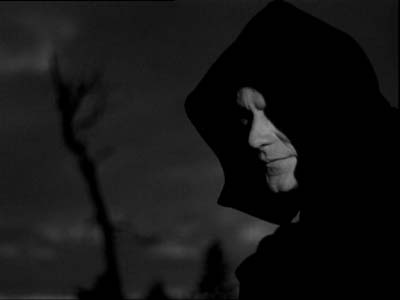
In 1957, Swedish filmmaker Igmar Bergman released his 18th film, Det sjunde inseglet (The Seventh Seal). The film follows a medieval knight, Antonius Block(Max von Sydow) as he travels across the plague-ridden Sweden. He encounters a figure, Death(Bengt Ekerot), who has come to collect his life. Antonius challenges Death to a game of Chess, the wager being his life. They start their game, but Death is called upon and must resume the game at a later time. Antonius and his squire Jons(Gunnar Bjornstrand) travel across the country side and soon after their encounter with Death, discover a dead man who appeared to be sleeping. They enter a stone church. Jons talks with a painter as Antonius enters the confession booth. He explains how his life has been a "futile pursuit, a wandering, a great deal of talk without meaning. I feel no bitterness or self-reproach because the lives of most people are very much like this. But I will use my reprieve for one meaningful deed." He then explains how he is in a chess match with Death and reveals his strategy on the perfect victory. The priest opens the wall and Antonius finds that the priest is actually Death. Soon after, Jons saves a girl from being raped and is joined by two others who are tormented by the man as well.


There is a subplot in The Seventh Seal. It follows an actor named Jof. He is introduced to the audience by waking up and claiming he saw the Virgin Mary in the distance. He rejoins his wife and kids and as they are traveling across the countryside, they enc outer Antonius, who is in the middle of his match against Death. He warns them of the plague that is spreading through the land. Death leaves again and Antonius joins the family. Antonius finds peace as he eats with the family in a field. He explains how he loved his wife before he left for the Crusades as much as Jof loves his wife. He invites them to his castle so they can be safe from the plague. As they travel they encounter a young girl, marked a witch, who is to be burned at the stake. As she is being tied, Antonius asks her to summon Satan so he can "Ask the Devil about God". As they rest, Death returns to continue his match with Antonius. Antonius knocks over a chess piece, distracting Death long enough for Jof and his family to escape. Death checkmates Antonius and declares the next time they meet, his time will be up. Antonius and his party return to Antonius' castle where his wife is waiting for him. They eat a "last supper" before Death comes for them. A storm hits as Death arrives. Antonius pleads to God to have mercy on them. In one final famous scene, as Death collects them, one of the girls smiles and simply states, "It's finished." The final shot is of Jof and his family waking up on a beach where he sees a vision of his friends dancing in a line with Death.


Bergman tackles so many themes in this classic. The contrasts of life and death, the questions we have about religion (the title is a reference to a passage in the Book Of Revelation). Bergman masterfully uses mythic overtones but grounds them in reality. Antonius is a man who has led a life he is not proud of and is desperately trying to redeem himself in his 11th hour. He does this by befriending Jof and his family, and then rescuing them from Death by sacrificing himself. Bergman tackles both spiritual belief and spiritual denial in the characters of Antonius and Jof. Jof is a family man who believes anything is possible even in a world ravaged by the plague. Antonius is man who has lost his faith in God and in man. They meet and contrast and it appears at one point that Antonius feels that although Jof is less successful than him, he is a better man with better values. Antonius is a generous, good human being at his core, he has just been hardened by the world around him.

Bergman's Seventh Seal will forever be a classic piece of cinematic history. It won the Cannes Jury Special Prize, and has been praised since it's release as a masterpiece of Cinematography. It is truly a film that is overlooked by many noted film organizations, most notably the American Film Institute, yet still this film resonates. It a piece of dark poetic storytelling done better than perfect by the master himself, Igmar Bergman.

Photos Courtesy of:
www.bbcmedia.com
www.imdb.com

Tuesday, March 23, 2010

World Cinema Classic: Monty Python's The Meaning Of Life

Known for their intellectually sick and twisted sense of humor, the members of Monty Python are masters at satire. There is no better example of this then their 1983 film The Meaning Of Life. No one is safe as the Pythons pick apart everything from the Catholic Church to War. As the tag line states "It took God seven days to create earth, and Monty Python 90 Minutes to screw it up." So how is it a classic?


The film starts in very typical Python fashion, with a completely unrelated short film entitled The Crimson Permanent Assurance which tells the story of an office of old men who rebel against their corporate oppresses and turn their building into a moving pirate ship. They travel to the financial center of the world and pillage. This last for twelve hilarious minutes, and then the the actual film starts. The Pythons (John Cleese, Graham Chapman, Micheal Palin, Terry Jones, Eric Idle and Terry Giliam) are all fish in a tank. They see their friend Howard being eaten. Cleese remarks "Really makes you think." Thus begins The Meaning Of Life.This is by far the Python's darkest film with a mix of brilliant black humor and spectacular violence as well as a few interesting musical numbers. The film covers the Seven stages of a man's life: The Miracle of Birth, Growth and Learning, Fighting Each Other, Middle Age, The Autumn Years, and Death. Part I: The Miracle of Birth parodies how fast birth happens, yet how meticulous the process and why it costs so much (see here the meaningless machine that goes 'PING'). The section ends by parodying the catholic church's birth (or non birth) control methods and attitude towards conception with the elaborate musical number "Every Sperm Is Sacred". A man has to sell his kids to scientific research because he has too many (about 100) and has no way to feed them. The Pythons cover their bases by showing a protestant couple across the street denouncing the catholics because "Every time they have intercourse they must have child" to which his wife replies "But Thomas, we have two children, and we've only had intercourse twice.". He rants to her about the Catholics tolerance of having intercourse for fun, although his frustrated wife points out that they never do. Python brilliance.


Part II: Growth and Learning dives into school. A group of school boys are attending an Anglican Church where they recite the hymn "Oh Lord, Please Don't Burn Us". Again they Python's use a satirical approach to they schooling they were all brought up in. The act includes John Cleese as a headmaster leading the students in a sex ed. class to which he goes as far as actually physically demonstrating techniques with his wife as the students watch with bored expretions. Cleese berates the students for wanting to "Move too fast in the process." and asks the question "What's wrong with starting her out with a kiss boy? What's wrong with a simple kiss?" again Python satire at it's best but in a surprisingly subtle way. This section ends in a hilarious rugby game between the school children and the masters (an actual rugby team) who violently destroy the school children on the field.

Part III: Fighting each other is the Python's take on war and how silly it is. A commander (Jones) is trying to lead his troops through a battlefield in World War I. They feel this is the last time they will see him alive, plus it's his birthday so they reveal they have bought gifts (two clocks because "There was a mix up sir. Alan thought he was getting the clock") and they even made him a cake. This is revealed as a war film as an officer (Chapman) the plus side of a military because "If you don't share the same beliefs as one another than military action is absolutely necessary. And may God strike me down if I am wrong" to which God strikes him with a bolt of lightning. Outside a drill Sergent (Palin) is attempting to drill a platoon of soldiers, but dismisses them for their own personal leisure's. He then complains about the poor quality of the military. The power of authority is mocked in next scene when we flashback to the Anglo-Zulu War of 1879. After a horrific attack by the Zulus, the officers brush the death toll off in lieu of a more pressing matter, one of the officers has lost a leg, presumably to a Tiger (to which everyone who is told remarks "In Africa?!"). They begin to hunt for the leg and in typical Python fashion, the scene is cut off by a celebration of The Middle Of The Film. This includes a classic scene where the audience is told to find the fish. Jones appears in a tux and two disjointed, elongated arms and says, "I wonder where that fish did go? That fishy, fishy, fishy, oh." The fish from the beginning of the film return to comment "They haven't really said much about the meaning of life yet."


Part IV: Middle Age consists of an American couple (played by Palin with Idle as his wife) who visit a strange restaurant set in a Medieval dungeon but set to Hawaiian music. They order a conversation about the meaning of life. They feel that the topic is too boring and order another. Part V: Live Organ Transplants follows two paramedics (Chapman and Cleese) as they collect a donation of a liver (Gilliam as a Rastafarian Jew with a Hitler moustache). Being that he is still alive he initially refuses but the two paramedics burst through the door and violently and brutally disembowel him (All off screen. All the audience see is Chapman's face and white coat begin to have blood squirted on it and all we hear is Gilliam's comical yells and his legs and hands flailing) This is the peek of the Pythons violent humor in the film as we the audience finds themselves unable to not laugh at what they see the way it is presented. The execution is what makes it hilarious. Idle then appears in a pink suit and sings the infamous "Universe Song" about the wonders of our universe.


Part VI: The Autumn Years and the final section Part VII: Death go hand in hand. The Autumn Years includes the classic scene in which an overly outrageously large man devours all the food in a fancy French restaurant, only to explode when he eats a "Waffer" thin mint. This leads into Part VII: Death which starts by showing a funeral with an empty casket at the bottom of a cliff. A man (Chapman) is running because he is about to die. He has been convicted of "telling gratuitous sexist jokes in a moving picture" and has chosen his method of death. His method: to be chased off a cliff by a pack of topless roller derby women. The final scene is a parody of Swedish films (Particularly Igmar Bergman's The Seventh Seal) showing Death come collect a a group of people from a dinner table. He brings them to Heaven where the film ends on a massive musical note "Everyday Is Christmas in Heaven" (Which is bitter sweetly lead by Chapman who would die 6 years later). Then comes The End Of The Film where a lady in a chair (Palin) is handed an envelope containing the meaning of life which is:
Try and be nice to people, avoid eating fat, read a good book every now and then, get some walking in, and try and live together in peace and harmony with people of all creeds and nations.

Monty Python takes all of the serious matters in life and pumps out a satirical look at them. This is the brilliance behind Monty Python, particularly The Meaning Of Life. It shocked and offended when it came out but as Eric Idle put it, it shocked all the right people who take life too seriously. Monty Python showed us that if we are bottled up all our lives and take it way too seriously, then whats the point? The meaning of life is exactly that: Life. We should live it, enjoy it and it's surprising that we should be taught this lesson from the likes of Monty Python but it happened. It's at times silly, but also at times intellectually brilliant. It's punk cinema at it's best. This makes Monty Python's The Meaning Of Life not only a British Cinema Classic, and a Punk Cinema Classic, but a World Cinema Classic.

Photos Courtesy of:
www.bbcmedia.com
www.wikimedia.org